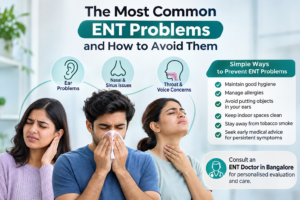
What are the most common ENT problems, and can you prevent them? Ear infections, blocked ears, allergic rhinitis, sinusitis, sore throats, tonsillitis and voice problems are among the conditions commonly evaluated by ENT specialists. While not every ENT problem is preventable, good hygiene, safe ear-cleaning practices, allergy management and early attention to persistent symptoms can reduce certain risks.
If symptoms repeatedly disturb your sleep, hearing or breathing, consulting an ENT Doctor in Bangalore can help identify the cause.
At Svastii, (Prof.) Dr. Satish Nair provides evaluation and treatment for ear, nose, throat and head-and-neck conditions.
Why Do My Ear, Nose and Throat Problems Keep Coming Back?
Many patients experience recurring symptoms without understanding why they return.
The ear, nose and throat are connected through passages that help regulate breathing, drainage and middle-ear pressure. Inflammation in one area can sometimes affect another.
Common contributing factors include:
- Viral respiratory infections
- Dust, pollen and other allergens
- Exposure to tobacco smoke or air pollution
- Poor ear-cleaning habits
- Repeated throat irritation
- Structural problems affecting nasal airflow
Identifying the underlying cause is more useful than repeatedly treating individual symptoms without a diagnosis.
Why Does My Ear Feel Blocked Even When I Don’t Have an Infection?
A blocked ear may result from earwax accumulation, pressure changes, fluid behind the eardrum or inflammation affecting the Eustachian tube.
Some people attempt to clear the blockage using cotton buds, hairpins or home remedies. These methods may push wax deeper or injure the ear canal.
How can you avoid ear problems?
- Avoid inserting cotton buds or sharp objects into your ears.
- Dry the outer ears gently after bathing.
- Protect your hearing from prolonged loud noise.
- Avoid using ear drops without appropriate advice, especially if you have discharge or a suspected eardrum perforation.
An ENT examination may involve otoscopy and, when necessary, hearing tests such as pure-tone audiometry or tympanometry.
Persistent blockage, pain or discharge should be assessed. Sudden hearing loss requires urgent medical evaluation.
For information about conditions that may require surgical management, read about endoscopic ear surgery at Svastii.
Why Do I Keep Sneezing or Waking Up With a Blocked Nose?
Frequent morning sneezing, nasal itching, a watery discharge and congestion may indicate allergic rhinitis.
Possible triggers include house dust mites, pollen, mould and animal allergens. However, repeated nasal blockage can also occur with infections, nasal polyps or a deviated nasal septum.
How can you reduce nasal irritation?
- Wash bedding regularly.
- Reduce exposure to identified allergens.
- Avoid smoking and second-hand smoke.
- Use saline nasal sprays or rinses appropriately.
- Keep indoor spaces clean and well ventilated.
If using nasal rinses, choose sterile, distilled or previously boiled and cooled water.
An ENT specialist may examine the nasal passages and recommend allergy assessment or nasal endoscopy when indicated. Treatment can include saline care, suitable nasal medications and allergen avoidance.
How Can I Tell Whether My Sinus Problem Is More Than a Common Cold?
A common cold often improves within several days, although some symptoms may last longer.
Sinusitis can cause nasal congestion, thick discharge, facial pressure and reduced smell. A bacterial infection becomes more likely when symptoms persist beyond ten days without improvement, become severe or worsen after initially improving.
Can sinus infections be prevented?
Handwashing, avoiding tobacco smoke and managing allergies may help lower the likelihood of certain sinus problems.
Most uncomplicated acute sinus infections do not require antibiotics. Treatment depends on the suspected cause and examination findings.
Patients with recurrent or prolonged symptoms may need nasal endoscopy or, in selected cases, CT imaging.
Learn more about Svastii’s endoscopic sinus and skull-base services.
Why Do I Frequently Get a Sore Throat or Lose My Voice?
Recurring throat irritation may be associated with viral infections, allergies, postnasal drip, acid reflux or excessive voice use.
Teachers, singers and people who speak continuously for work may notice voice fatigue or hoarseness.
What can help protect throat and voice health?
- Drink adequate fluids throughout the day.
- Avoid smoking and tobacco exposure.
- Rest your voice when it becomes strained.
- Avoid frequent shouting or forceful throat clearing.
- Address persistent reflux symptoms with medical guidance.
Antibiotics are not routinely needed for viral sore throats.
An ENT examination may include throat inspection or flexible laryngoscopy to assess persistent voice changes.
Hoarseness lasting more than three weeks, particularly in people who smoke, warrants medical assessment.
Why Does My Child Keep Getting Ear or Throat Infections?
Children can experience frequent respiratory infections because their immune systems are still developing and they have regular exposure to infections in schools and group settings.
Middle-ear infections and tonsillitis are common childhood ENT concerns.
Parents can reduce certain risks by encouraging handwashing, keeping vaccinations up to date, avoiding household smoke and ensuring appropriate treatment when symptoms persist.
Repeated infections do not automatically mean surgery is required.
An ENT specialist may review infection frequency, hearing difficulties, sleep-related breathing symptoms and previous treatments before recommending further investigations.
What Tests Might an ENT Doctor Recommend?
Not every patient requires extensive testing. The investigations depend on the symptoms and clinical findings.
Common examinations include:
- Otoscopy: To inspect the ear canal and eardrum.
- Audiometry: To evaluate hearing difficulties.
- Tympanometry: To assess middle-ear function.
- Nasal endoscopy: To examine persistent nasal obstruction or sinus-related concerns.
- Flexible laryngoscopy: To investigate persistent hoarseness or selected throat symptoms.
Treatment may involve observation, medication, lifestyle measures or specific procedures when medically indicated.
When Should I Stop Using Home Remedies and See an ENT Specialist?
Mild symptoms associated with a cold may settle with supportive care. However, certain warning signs should not be ignored.
Arrange medical evaluation for persistent ear discharge, recurring infections, ongoing nasal obstruction, hearing changes, difficulty swallowing or prolonged hoarseness.
Seek urgent medical attention for sudden hearing loss, severe breathing difficulty, significant throat swelling, difficulty swallowing saliva, or rapidly worsening symptoms accompanied by high fever or severe illness.
Early evaluation helps identify conditions that may need specific treatment rather than repeated self-medication.
Frequently Asked Questions
1. Can using earphones every day cause ENT problems?
Using earphones does not automatically cause infections. However, prolonged loud-volume listening can damage hearing. Poorly maintained earbuds may also irritate the ear canal. Keep devices clean, use comfortable volumes and take listening breaks.
2. Is it normal to have a blocked nose every morning?
Occasional congestion may occur, but daily morning blockage can be associated with allergies, environmental irritants or structural nasal problems. If symptoms persist, affect sleep or occur mainly on one side, an ENT examination may help determine the cause.
3. Do frequent throat infections always require tonsil surgery?
No. Tonsil surgery is generally considered only in selected situations, such as sufficiently frequent, documented infections or significant sleep-related breathing obstruction. The decision depends on symptom severity, medical history and examination findings.
4. Can untreated ENT problems affect hearing or sleep?
Yes. Some middle-ear conditions may affect hearing, while persistent nasal obstruction or enlarged tonsils can contribute to disturbed sleep. The impact depends on the underlying condition, so persistent symptoms deserve appropriate evaluation.
5. Should I take antibiotics whenever I have an ear or throat infection?
No. Many ear and throat symptoms are caused by viral infections or non-infectious inflammation. Antibiotics are appropriate only for selected bacterial infections. Unnecessary antibiotic use can cause side effects and contribute to antimicrobial resistance.
How Can You Protect Your ENT Health in Everyday Life?
Good ENT health begins with simple, consistent habits: avoid putting objects inside your ears, manage allergies, reduce exposure to smoke, maintain good hand hygiene and pay attention to symptoms that repeatedly return.
If these measures do not improve your symptoms, a consultation with an ENT Doctor in Bangalore may help clarify the diagnosis and available treatment options.
(Prof.) Dr. Satish Nair, an ENT and Head & Neck Surgeon associated with Svastii, has more than 30 years of clinical experience, as described in his published profile.
Understanding the cause of your symptoms is an important step toward choosing appropriate care.
Medical information disclaimer: This article is intended for general patient education and does not replace individual medical advice, diagnosis or treatment.